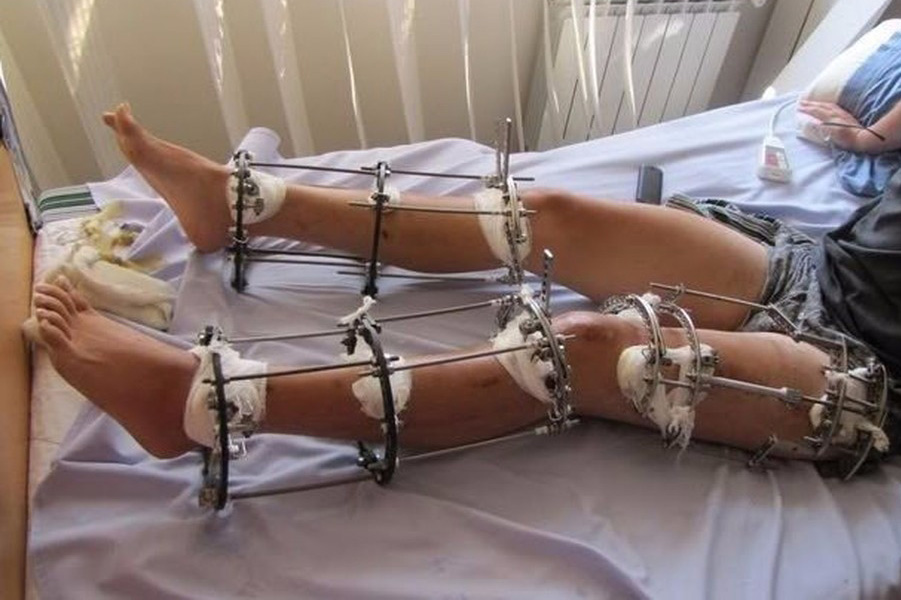
Our surgeons offer surgical treatments for the correction of upper and lower limb deformities, discrepancies, and injuries in adults and children. We help individuals with orthopaedic issues due to trauma, birth defects, infections or bone tumors. Our aim is to use the best tools available today — from hexapod external fixation to internal limb lengthening devices, such as the Precice® motorized magnetic nail and the newest technology, the STRYDE® weight bearing lengthening nail. These tools are combined with our surgeons' expert surgical techniques to achieve results many patients have only dreamed of.
We perform arm and leg lengthening, limb malalignment correction, repair bone nonunions, and treat knee and ankle arthritis with distraction, fusion, or replacement. Along with limb length discrepancy, we correct genu valgum, commonly known as knock knee, and genu varum, or bowleg. We are experts at limb salvage and amputation reconstruction. Whether patients are suffering from arthritis, genetic deformity, bone tumor, or the after effects of a traumatic accident, the Limb Lengthening & Complex Reconstruction Service of Hospital for Special Surgery is ready to get them on the road to recovery and an improved quality of life.
We recommend that you maintain a healthy diet and healthy weight (BMI less than 30). There are no specific leg strengthening exercises that you need to do with physical therapy prior to the surgery. We will not perform the surgery on anyone who is actively smoking or using nicotine products due to nicotine severely impacting wound and bone healing. If you use nicotine products during your limb lengthening process, it can delay healing and lead to adverse outcomes. Dr. Mehta will take a full history during your consultation to rule out any comorbidities that may exclude you from surgery including osteoarthritis, osteoporosis, diabetes, obesity, or any metabolic bone disease. Based on your past medical history, we may recommend that you have blood work and an electrocardiogram preoperatively. If needed, those could be performed that same day at our clinic.
Surgery would be performed at Deep Sai Hospital (located across the street from our clinic) at 51 N. 39th Street Philadelphia, PA 19104. The actual procedure takes approximately 5 hours, which includes getting prepared for surgery by anesthesia through the recovery period in the Post-Anesthesia Care Unit. You can expect to stay in the hospital for 2 nights after the procedure. During this stay, we will make sure your pain is controlled and that you are able to ambulate safely.
You will be able to bear weight on both of your legs immediately after surgery, but you may require the use of crutches or a walker for stability. The lengthening device that will be used can withstand 250lbs immediately after surgery, allowing you to bear weight right away. A physical therapist will work with you while you are in the hospital to help you walk with these devises.